A backyard feels different when you can sit on the patio without looking into the next driveway, let the dog out into an enclosed space, or give the kids room to play away from the street. A well-planned vinyl fence can make the outdoor space you already have more comfortable, more private, and easier to use.
At Herb Geddes Fence, we install vinyl fencing throughout Central Kentucky, including Lexington, Nicholasville, and Richmond. Whether you want to screen a patio, enclose a pool, or fence the entire backyard, the right design starts with how you use the space.
How can a vinyl fence make your backyard more usable?
- Create privacy where you need it. Solid vinyl panels can screen a patio, deck, or play area from neighboring homes or a busy street. You may only need privacy along one or two sides. A more open style elsewhere can preserve a view or keep the yard feeling spacious.
- Control access to your property. A continuous fence with a latching or lockable gate gives visitors a clear entry point and helps deter casual cut-through traffic. The layout can also direct guests away from areas you want to keep private, such as a side yard where you store equipment.
- Give children and pets a defined place to play. A fence adds a physical boundary between the play area and the driveway, street, or neighboring property. For dogs, fence height and the gap beneath the panels and gates matter as much as the material. Tell your installer if you have a small dog that squeezes through openings or a larger dog that jumps or digs. That information can change the layout and style we recommend.
- Make room for everyday outdoor living. With a little privacy, a patio can become a regular spot for dinner, coffee, or time with friends. A fence can also divide a yard into spaces with different purposes, such as a dog run, a garden, and a seating area, while keeping a convenient route for mowing and yardwork.
Can vinyl fencing be used around a swimming pool?
Yes. A vinyl fence can serve as a pool barrier when the entire enclosure, including the gate, meets the requirements for your property. The U.S. Consumer Product Safety Commission recommends a barrier that completely surrounds the pool, with a self-closing, self-latching gate. Confirm local requirements for height, openings, ground clearance, and gate hardware before choosing a style. A pool fence adds a layer of protection alongside close adult supervision. (See CPSC.gov for more information.)
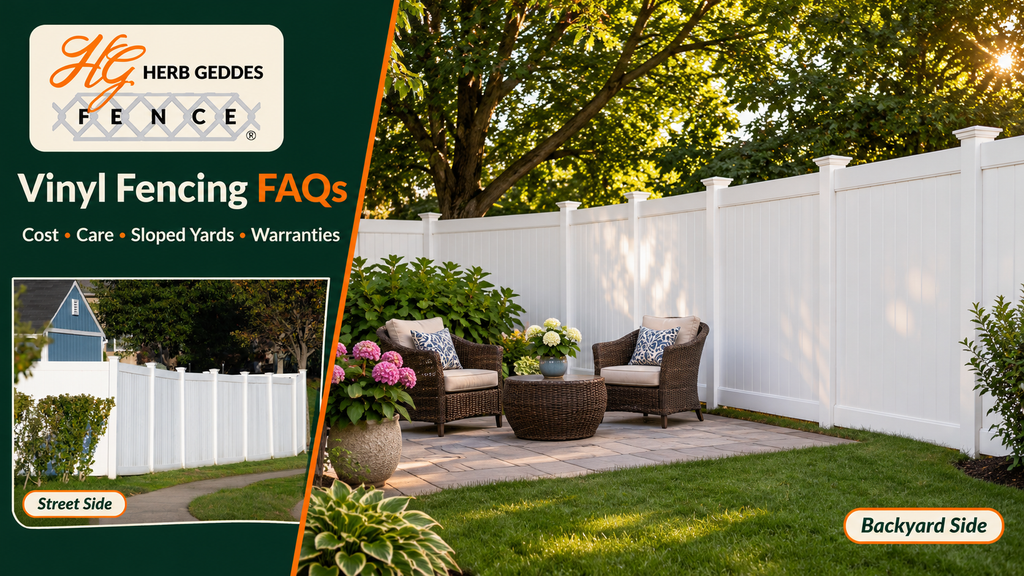
What are the advantages of vinyl fencing over wood?
Vinyl is a good fit for homeowners who want a finished look with less regular upkeep. Herb Geddes Fence offers ActiveYards vinyl fencing in a range of styles, including traditional picket, solid privacy, and decorative-top designs. Depending on the product, you can choose from several colors or combine colors for a two-tone look.
| What matters to you | Vinyl fencing | Wood fencing |
|---|---|---|
| Appearance | Clean, uniform finish with options for pickets, privacy panels, and decorative tops | Natural grain with a wide choice of paint and stain colors |
| Durability | Resists rot and splintering. Posts, panels, and hardware still benefit from periodic checks. | Lifespan depends on the wood species, moisture exposure, and upkeep. Individual boards can often be replaced. |
| Maintenance | An occasional wash and a check of the gate hardware are usually the main tasks. | May need periodic staining or sealing, along with repairs as boards weather. |
| Cost over time | Often costs more upfront. Savings on staining, sealing, and routine board replacement can help offset the difference. | Pressure-treated wood often costs less upfront. Future maintenance and replacement should be part of the budget. |
A pressure-treated wood fence may last 10 to 15 years with proper care, while cedar can last longer. Vinyl can outlast pressure-treated wood and eliminates the recurring job of staining or sealing. When you compare quotes, think about how long you plan to stay in the home and how much upkeep you want to take on.
Does vinyl fencing work on a sloped or hilly yard?
Yes, many sloped yards can accommodate vinyl fencing. The best approach depends on how quickly the grade changes, the panel style, and how much clearance you can allow beneath the fence.
- Racked panels angle with the slope while the posts and pickets stay vertical. This can help keep the bottom of the fence closer to the ground on a gradual, consistent grade. The amount of slope a panel can follow depends on the product.
- Stepped panels stay level, with each section installed higher or lower than the next. This can work on steeper grades, but the openings beneath the downhill end of each panel need careful attention, especially for pets and pool enclosures.
Small yards can often be fenced effectively by enclosing a patio, play area, or dog run. On larger properties, you might fence only the part you use every day. Steep grade changes, retaining walls, shallow rock, drainage paths, narrow access, utility locations, and easements can affect where posts can go. Some sites need a different fence route or style, and a particular section may be unsuitable for vinyl. A site visit helps identify those issues before you settle on a design.
How much does vinyl fencing cost per linear foot?
For budgeting, HomeGuide reports a national installed range of $30 to $60 per linear foot for vinyl fencing overall and $40 to $85 per linear foot for vinyl privacy fencing. Those figures are a starting point for planning. Your Herb Geddes Fence estimate will reflect your layout, panel height and style, gates, site access, grade, and any old fence removal. Two yards with the same footage can have different costs when one has multiple gates or difficult digging conditions.
Do most HOAs allow vinyl fencing?
Approval depends on your neighborhood’s written rules. Some HOAs allow vinyl in specified colors, heights, or styles. Others require wood or ornamental fencing to match nearby homes or preserve an open streetscape. An HOA might allow white vinyl pickets and restrict solid privacy panels, or allow backyard fencing while limiting what can be installed along a side street.
Before ordering materials, check the architectural guidelines and ask what the association needs for written approval. A product photo, proposed height and color, and a sketch showing the fence and gates are useful details to have ready. Confirm any local height, setback, or permit requirements as well.
Does vinyl fencing come with a warranty?
Herb Geddes Fence offers a one-year warranty. Ask for the documents that apply to your selected fence so you can review what they cover, how to make a claim, and whether transfer requirements apply if you sell your home.
How do you clean and maintain vinyl fencing?
Start by rinsing dust, pollen, and grass clippings away with a garden hose. For stubborn dirt, use mild soap and water with a soft cloth or brush, then rinse. Follow the manufacturer’s care instructions for stains that need extra attention. Keep string trimmers away from posts and panels, and periodically check that gates swing freely, latches engage, and hardware is tight. If the fence encloses a pool, regularly test that the gate closes and latches on its own.
Can vinyl fencing add value to your home?
A well-installed fence can improve curb appeal and make a backyard more useful to buyers who want privacy, an enclosed space for a dog, or a defined outdoor entertaining area. Any effect on resale price depends on your local market, the condition and appearance of the fence, and what buyers in your area value. Choose the layout for the way you’ll use the yard now, with an eye toward everyday details a future owner will appreciate, like a gate wide enough for a mower.
How long does installation take, and what should you expect?
Many straightforward residential installations take a few working days on site. The full schedule can be longer when it includes approvals, material lead times, utility marking, old fence removal, or time for post footings to set. Weather, rocky soil, and steep terrain can also affect the schedule. Ask for a project-specific timeline when you get your estimate.
- Walk the yard and plan the layout. Discuss what you want to enclose, where you need privacy, and how you’ll use each gate.
- Confirm the fence line and site requirements. Verify property boundaries, address approvals and easements, and arrange utility marking before digging. Identify private lines, such as irrigation or outdoor lighting, as part of the site review.
- Prepare the site and set the posts. Remove old fencing if it’s included in the scope, lay out the new fence, and set the posts according to the selected system and site conditions.
- Install the panels and gates. Fit the rails and panels, hang the gates, and adjust the hardware. At the final walkthrough, check how the gates operate and review care and warranty details.
Why choose Herb Geddes Fence for your vinyl fence?
Herb Geddes Fence is a family-owned, fully insured Central Kentucky fence company serving the area since 1968. Our crews install vinyl, wood, aluminum, and chain-link fencing, so we can help you compare materials and choose a layout that suits your yard. Bring us the practical details, like the dog that digs, the view you want to keep, or the pool gate that needs to work reliably every time. Those details help us recommend a fence you’ll be glad to use every day.
Ready to see what would work in your yard? Call Herb Geddes Fence at (859) 885-2215 or request a free vinyl fence estimate.